
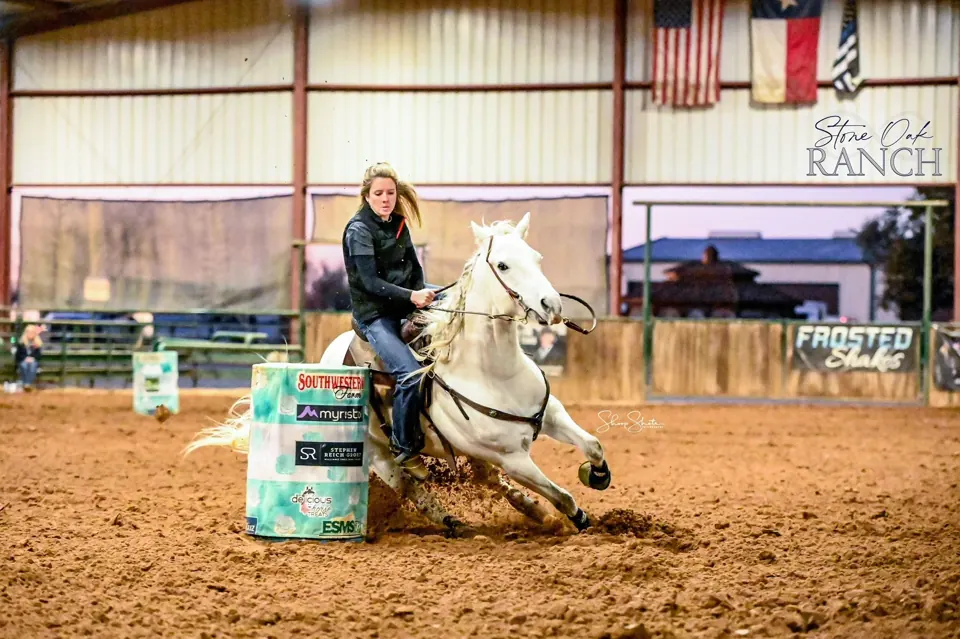
5 training tips for barrel horses and riders.
The fundamentals that build a faster, more consistent barrel horse, and keep it sound and willing.
The best barrel racing horse training comes down to five fundamentals: build correct form slowly before adding speed, teach the horse to rate and shape its turns, ride with good position and eyes, keep the horse conditioned and sound, and avoid over-running the pattern. Horses trained this way are faster and more consistent, and they stay willing for years.
1. Build correct form at slow speeds first
Speed exposes holes in training; it does not fix them. Every good barrel horse learned the pattern at a walk and trot long before it was asked to run. Slow work lets the horse learn where its feet go, how to bend through its body and how to stay between the rider’s hands and legs.
At slow speeds, look for a horse that stays soft in the face, keeps its shoulders up through the turn and finishes the turn before leaving the barrel. If the horse cannot do that at a trot, it will not do it at a run. When the slow work is right, add speed in small steps — a little more lope, a stronger run home — and go back to slow work the moment form falls apart.
2. Teach rate and shape
Rate is the horse’s ability to collect and shift its weight back onto its hindquarters as it approaches a barrel, so it can turn instead of running past. Shape is the path it takes around the barrel: a controlled approach into the pocket, a turn close enough to save time but wide enough to clear the barrel, and a straight line to the next one.
Both are taught, not assumed. Drills like circles around a barrel, stopping on the hindquarters and practicing the approach at a trot help the horse learn to come back to the rider before the turn. A horse that rates on its own, without being pulled on, saves time and is easier to ride. A horse that has to be hauled down at every barrel will lose time and eventually start fighting the rider.
3. Ride with good position and good eyes
The rider is half of every run. Small position mistakes cost time and confuse the horse.
- Look where you are going. Eyes on the pocket of the next barrel, not the ground or the barrel you are turning. Your body follows your eyes, and your horse follows your body.
- Sit deep and stay centered. Leaning into the turn or dropping a shoulder pulls the horse into the barrel. Stay upright and balanced over the horse’s center.
- Use quiet hands. Guide the turn with your inside hand and keep your outside hand on the horn so you stay centered. Avoid big, jerky pulls.
- Ride the whole pattern. Keep riding through each turn and all the way home. Many runs are lost by a rider who quits riding halfway.
Video helps. Watching your own runs, even practice runs, shows habits you cannot feel in the saddle.
4. Keep the horse conditioned and sound
A barrel run lasts only seconds, but it puts enormous stress on a horse’s legs, back and lungs. A fit horse runs faster and is less likely to get hurt.
- Build a base. Long trotting, loping in large circles and riding hills build wind and muscle without the strain of repeated runs.
- Warm up and cool down every time. Walk and trot before asking for speed, and walk until the horse is breathing normally afterward.
- Check legs daily. Know what normal looks and feels like, so heat, swelling or a short stride gets noticed early.
- Stay on schedule with the farrier and vet. Balanced feet and regular veterinary care prevent small issues from becoming big ones.
- Protect the legs. Properly fitted boots or wraps during work help guard against knocks and strikes.
5. Don’t over-run the pattern
One of the most common ways to sour a good barrel horse is running the pattern too often at full speed. Horses learn quickly, and a horse that runs barrels every day starts to anticipate — ducking in early, refusing to rate, or getting nervous in the alley.
Most of a barrel horse’s training should happen away from full-speed runs: slow pattern work, drills on circles and stops, and plenty of riding that has nothing to do with barrels. Trail rides and easy days keep a horse’s mind fresh. At events, use exhibitions to work on specific problems without the pressure of a timed run. Save the hard runs for when they count.
Putting the five tips together
These tips work as a system. Slow, correct work builds the rate and shape a horse needs. Good rider position keeps the horse from being pulled out of that shape. Conditioning keeps the horse able to do the job, and limiting full-speed runs keeps it wanting to. Skip one and the others suffer. A horse that is sore will not rate well, and a rider who leans into turns can undo months of careful slow work. When something goes wrong in a run, check all five before deciding the horse is the problem.
When a horse needs more than tips
Some horses need a professional’s eye: a horse that has started hitting barrels, refusing to go in the alley, or losing its rate, or a young horse ready to start on the pattern. Rank Equine’s barrel horse training covers tune-ups, starting colts on the pattern (typically at two to four years old), problem barrel horses and conditioning. Owners outside Texas can haul in for board-and-train; horses have come from as far as Alabama. Riders who want to work on their own position can book barrel racing lessons with Lexi Rankin, a 2021 BBR World Finals qualifier who competes in UPRA rodeos.
Want Lexi to take a look at your horse? Call or text her at 817-600-3575.
Quick answers.
How do you train a barrel horse?
Start with solid basics, then teach the pattern slowly at a walk and trot until the horse bends, rates and finishes each turn correctly. Add speed in small steps, and return to slow work when form breaks down. Most training happens away from full-speed runs so the horse stays sound, calm and willing.
How often should you run barrels on a barrel horse?
As little as possible at full speed. Running the pattern too often teaches a horse to anticipate, duck in early or get nervous in the alley. Most work should be slow pattern work, drills and general riding, with full-speed runs saved for competitions or occasional, specific training goals.
What does rate mean in barrel racing?
Rate is a horse’s ability to collect and shift its weight back onto its hindquarters as it approaches a barrel, so it can turn efficiently instead of running past. A horse that rates on its own saves time and is easier to ride than one that must be pulled down at every barrel.
At what age do you start a horse on barrels?
Many trainers start colts on the barrel pattern at around two to four years old, depending on the horse’s physical and mental maturity. Early work is slow and focused on basics like bending, stopping and following the rider’s cues, with speed added gradually as the horse develops.
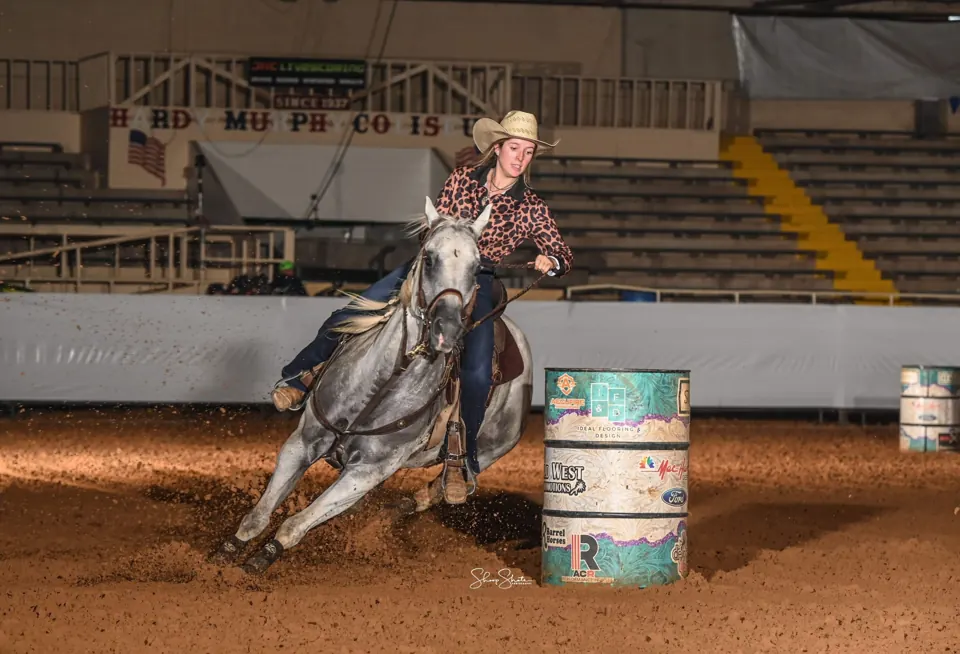
Let’s talk about your horse.
Tell Lexi where your horse is today and where you want to be. She’ll give you an honest read and a plan — whether you’re down the road in Jacksboro or hauling in from out of state.