
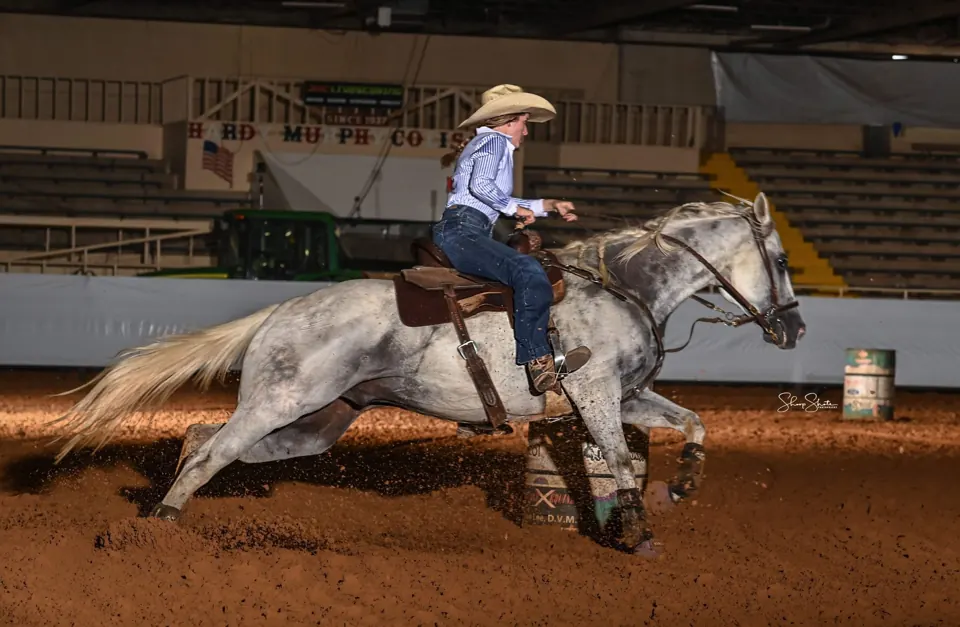
How to pick a good barrel horse.
What makes a good barrel horse, and how to tell whether the one in front of you is right for your rider.
A good barrel horse combines athletic conformation, a calm and willing mind, sound legs and feet, and a level of training that matches its rider. To pick one, be honest about the rider’s skill, evaluate the horse’s build and temperament, check its bloodlines and record, get a pre-purchase vet exam, and always watch video and ride the horse before you buy.
Start with an honest look at the rider
The right barrel horse for a beginner is not the right horse for a pro, and the most common buying mistake is shopping for the rider you hope to be instead of the rider you are. Before you look at a single horse, answer three questions:
- How experienced is the rider, and how much speed can they handle with control today?
- What are the goals for the next year or two: learning, local jackpots, youth rodeo, futurities, pro rodeo?
- Who will keep the horse tuned up: the rider alone, or a trainer?
Those answers decide almost everything else, from the age and training of the horse to the budget.
What makes a good barrel horse: conformation
A barrel horse runs, stops, turns and runs again in a few seconds. Its body has to be built for that. Look for:
- Strong, well-muscled hindquarters. The engine for driving out of each turn.
- A sloping shoulder. It allows a longer, freer stride and helps absorb impact.
- A short, strong back that ties in well to the loin, for carrying a rider through tight turns.
- Correct legs and good feet. Straight, well-set legs and solid hooves hold up to hard work. No feet, no horse.
- Overall balance. Front and back end that look like they belong together usually move together.
Perfect conformation is rare. What you want is a horse with no serious faults in the places that take the most stress.
Mind and temperament
Many trainers will tell you mind matters as much as body. A good barrel horse runs hard but keeps thinking. It should walk into an arena calmly, stand quietly to be saddled, and come back to its rider after a run. Watch for warning signs: a horse that rears or spins in the alley, refuses to enter the arena, or gets more frantic with each run.
Watch the horse handled on the ground, tied, saddled and loaded in a trailer. Those everyday moments tell you a lot about what living with it will be like.
Soundness and the pre-purchase exam
Always have your own veterinarian perform a pre-purchase exam before buying. A typical exam includes watching the horse move, flexion tests and a check of eyes, heart, lungs and feet. Depending on the horse’s price and intended job, your vet may recommend radiographs of the feet or joints. The exam does not guarantee a horse will stay sound, but it can uncover problems that would change your decision or your offer.
If the horse is coming from another state, plan for a current negative Coggins test and a certificate of veterinary inspection (health certificate) for travel. Your vet can tell you exactly what is required.
Match age and experience to the rider
- Beginners and youth riders need a seasoned, finished horse, often in its teens, that knows the pattern and forgives mistakes.
- Developing riders moving up the divisions can handle a horse that is solid on the pattern but still has room to improve.
- Experienced riders and trainers are the right match for young prospects and futurity horses that still need years of work.
An older, proven horse may cost more up front or have more wear, but for a learning rider it is often the safer and better investment.
Bloodlines
Pedigree tells you what a horse was bred to do. Horses bred from proven barrel sires and mares start with better odds of having the speed, turn and mind the pattern needs. Look at both sides of the pedigree, and ask what the dam and her other foals have done. Always verify bloodlines with the horse’s registration papers. Our article on A Streak Of Fling explains how to evaluate a famous name in a pedigree.
Still, a pedigree is a starting point. A well-bred horse with poor conformation or a difficult mind is not a bargain.
Video and a trial ride
Ask the seller for recent video of the horse working the pattern, ideally at an event, plus video of it being ridden at slower speeds. Then go see it in person. Ride the horse yourself if its training allows, and have the person who will actually ride it do the same. Pay attention to how the horse feels at a walk and trot, not just how fast it runs. If you can, ask your trainer to come along; a second experienced set of eyes catches things buyers miss.
Red flags to walk away from
- A seller who will not allow a pre-purchase exam.
- No video, or only video that is clearly old.
- A horse that is noticeably different from its video when you arrive.
- Bloodlines that cannot be confirmed with papers.
- Pressure to decide on the spot.
Barrel horses for sale at Rank Equine
At Rank Equine, Lexi Rankin, a champion barrel racer and 2021 BBR World Finals qualifier, raises and trains horses from proven barrel bloodlines. See what is currently available on our barrel horses for sale page, or learn about our breeding program. If you already own a horse that needs work, our training program handles tune-ups and problem barrel horses.
Want help finding the right horse for your rider? Call or text Lexi at 817-600-3575.
Quick answers.
What makes a good barrel horse?
A good barrel horse has athletic conformation with strong hindquarters, a sloping shoulder and correct legs and feet; a calm mind that keeps thinking at speed; sound health; and training that matches its rider. The best horse for a beginner is a seasoned, forgiving one, not necessarily the fastest horse available.
What is a good age for a barrel horse?
It depends on the rider. Beginners and youth riders usually do best on a seasoned, finished horse, often in its teens. Developing riders can handle a horse that is solid but still improving, while young prospects and futurity horses belong with experienced riders or trainers who can bring them along.
Do I need a vet check before buying a barrel horse?
Yes. Have your own veterinarian perform a pre-purchase exam, which typically includes movement evaluation, flexion tests and a check of eyes, heart, lungs and feet, with radiographs if recommended. It cannot guarantee future soundness, but it can reveal problems that change whether you buy or what you offer.
What should I ask when looking at a barrel horse for sale?
Ask for recent video at events and at slow speeds, the horse’s registration papers, its competition record, its health and farrier history, and why it is being sold. Ask whether you can ride it and bring your own vet for a pre-purchase exam. A seller who refuses either is a red flag.
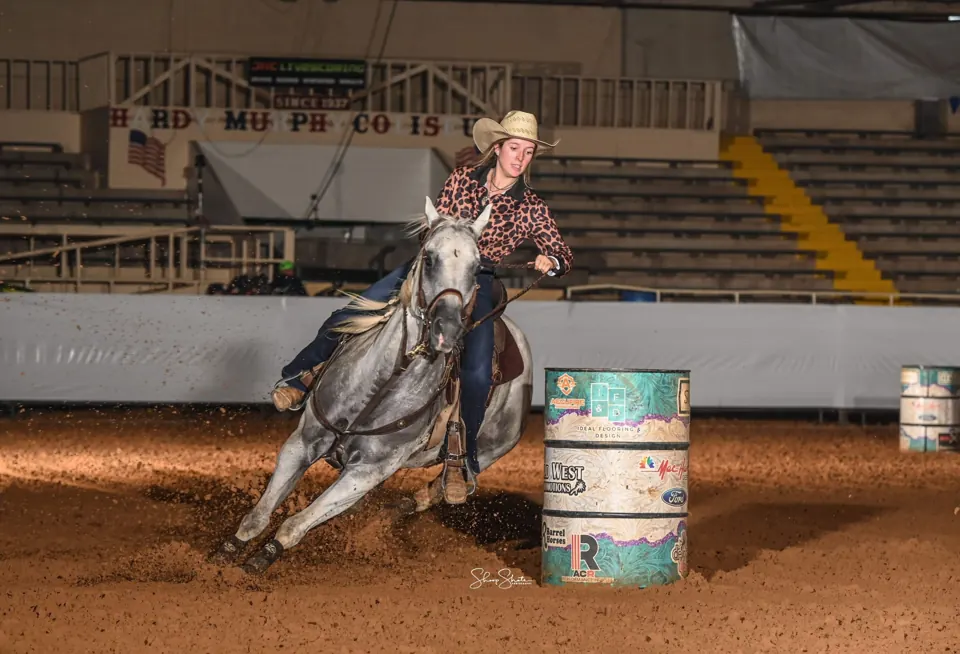
Let’s talk about your horse.
Tell Lexi where your horse is today and where you want to be. She’ll give you an honest read and a plan — whether you’re down the road in Jacksboro or hauling in from out of state.